Executive Communication That Converts: Georges Chahwan's Approach to Strategic Brand Messaging

When Leaders Speak, Does Anyone Actually Listen?
Most executives have a lot to say. Few know how to say it in a way that moves people.
That gap — between what leaders intend to communicate and what audiences actually receive — costs companies millions in lost trust, weak brand positioning, and missed conversion opportunities.
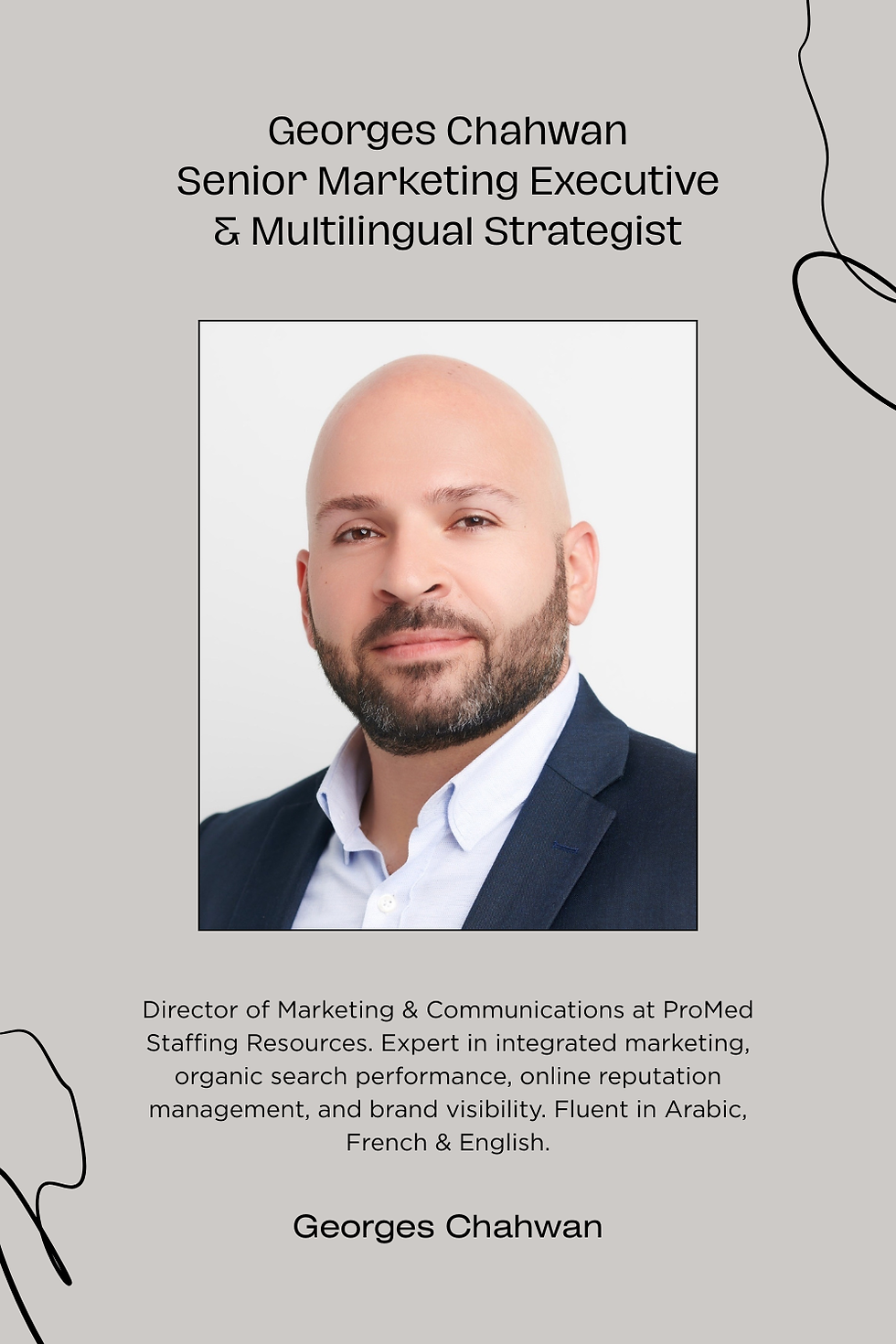
Georges Chahwan, Marketing Director at ProMed Staffing Resources, has spent years closing that gap. His approach to executive communication isn't just polished — it's engineered to convert. Every message serves a strategic purpose. Every story reinforces brand authority.

In this article, you'll discover the core principles behind his communication framework, why corporate messaging fails most organizations, and how brand storytelling transforms executive voices into genuine business assets.
Why Most Executive Communication Falls Flat
Here's the uncomfortable truth: executives are often the weakest link in their own brand strategy.
They speak in jargon. They lead with credentials instead of value. They treat communication as a formality rather than a conversion tool.
The result? Audiences tune out. Trust erodes. Opportunities disappear.
Effective executive communication requires more than confidence at a podium. It demands strategic intent, audience awareness, and a clear understanding of what you want people to feel, think, and do after every interaction.
The Credibility Gap in Corporate Messaging
Research from Edelman's Trust Barometer consistently shows that audiences trust subject-matter experts and peers far more than faceless corporate voices.
That means corporate messaging that hides the human behind the brand actively undermines trust.
The fix isn't a rebrand. It's repositioning the executive as the brand's most credible voice — with a strategy to back it up.
Georges Chahwan's Core Communication Philosophy
Georges Chahwan operates from one foundational belief: communication that doesn't serve the audience serves no one.
This isn't altruism — it's strategy. When messaging centers on audience needs rather than organizational ego, conversion rates climb. Engagement deepens. Brand loyalty strengthens.
His framework rests on three pillars:
Clarity over complexity — Strip every message down to its essential truth
Consistency across channels — Voice, tone, and values must align from LinkedIn to boardroom
Conversion as the north star — Every communication touchpoint should move the audience toward a desired action
Aligning Executive Voice With Brand Identity
One of the most common mistakes organizations make is treating executive communication as separate from brand strategy.
Georges Chahwan integrates both from day one. When he leads a rebranding initiative, executive voice is part of the brief — not an afterthought.
Consider this: if your CEO communicates innovation but your brand messaging signals caution, audiences feel the disconnect immediately. Consistency isn't just aesthetically pleasing. It's conversion-critical.
The Role of Brand Storytelling in Executive Messaging
Data persuades the mind. Story moves the heart. The most effective executive communicators know they need both.
Brand storytelling isn't about crafting fiction. It's about finding the authentic narrative that makes your organization's mission tangible and emotionally accessible.
Georges Chahwan applies this principle across every channel — from thought leadership articles and LinkedIn content to campaign messaging and client presentations.
How to Build a Story That Converts
Great brand stories follow a simple structure:
The problem — What challenge does your audience face?
The turning point — What shift in thinking or approach changes everything?
The outcome — What transformation becomes possible?
In practice, this means replacing "We are a leading healthcare staffing firm" with "Healthcare professionals deserve a partner who understands both their clinical expertise and career ambitions. That's exactly why we built ProMed differently."
One tells. The other sells.
Emotional Resonance as a Business Metric
Organizations often treat emotional connection as a soft metric — nice to have, hard to measure. Georges Chahwan treats it as a conversion driver.
When audiences feel understood, they engage longer, trust faster, and convert more reliably. Emotional resonance isn't the opposite of ROI — it's a path to it.
Omnichannel Consistency: Communicating Across Every Touchpoint
Executive communication doesn't live in one place. It spans LinkedIn posts, keynote presentations, media interviews, internal town halls, and campaign copy.
The challenge is maintaining a consistent voice and strategic message across all of them.
Georges Chahwan solves this with a messaging architecture — a documented framework that defines core messages, tone guidelines, audience personas, and channel-specific adaptations.
Why Channel Adaptation Matters
The same message needs to sound different on different platforms — without losing its core intent.
A LinkedIn post demands brevity and bold openings. A keynote needs narrative arc and emotional peaks. A media interview requires sound-bite clarity and controlled language.
Knowing how to adapt without diluting is the difference between a communicator and a strategic communicator.
Measuring the Impact of Executive Communication
What gets measured gets managed. Executive communication is no exception.
Georges Chahwan tracks communication performance through a combination of quantitative and qualitative signals — engagement rates, lead quality, share-of-voice metrics, and brand sentiment analysis.
This data-driven approach ensures that messaging evolves based on evidence, not assumption.
Key Metrics That Reveal Communication Effectiveness
Engagement rate on thought leadership content
Inbound lead quality following executive-authored campaigns
Brand search volume as a signal of growing authority
Sentiment trends across reviews, social mentions, and media coverage
When these metrics move together, it confirms that executive communication is doing its job.
Conclusion: Communication Is Strategy
Executive communication isn't a soft skill. In the hands of someone like Georges Chahwan, it becomes one of the most powerful growth levers a brand can activate.
Here are the key takeaways:
Effective corporate messaging starts with audience needs, not organizational ego
Brand storytelling converts because it creates emotional resonance alongside rational value
Consistency across channels isn't optional — it's foundational to trust
Executive voice must align with overall brand identity from the very beginning
Every communication touchpoint should have a measurable conversion goal
The question isn't whether your executives are communicating. It's whether what they're saying is actually working.
Ready to transform your executive communication into a genuine business asset? Start by auditing your current messaging — and ask honestly whether it serves your audience or just your brand.


Comments