Georges Chahwan's Approach to Marketing That Actually Works

Most marketing advice sounds great on a slide but falls apart in practice. Georges Chahwan, Marketing Director at ProMed Staffing Resources, takes a different route. His approach blends digital advertising, technical SEO, and email marketing into one connected system — not a pile of disconnected tactics.
In an industry as competitive as healthcare staffing, that distinction matters. Agencies need a steady flow of qualified candidates and reliable clients, not just impressions and clicks. He built his strategy around that reality.

This article breaks down what makes his approach different, why it works, and what other marketing leaders can learn from it. You'll see how he thinks about channels, teams, and measurable results — and why "actually works" isn't just a catchy phrase.
Who Is Georges Chahwan?
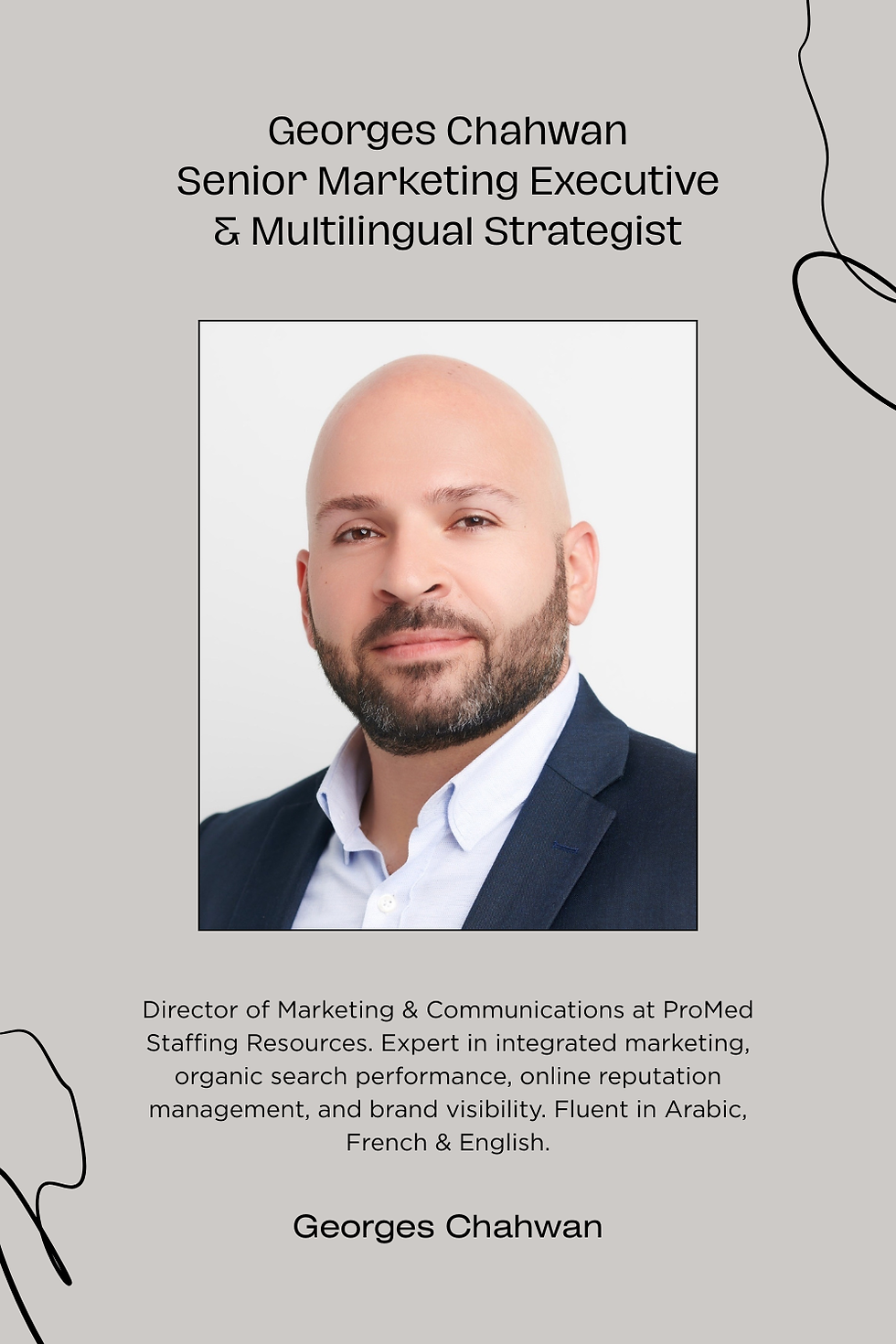
Georges Chahwan leads marketing at ProMed Staffing Resources, a healthcare staffing agency operating in a crowded, fast-moving market. His role covers everything from paid digital campaigns to technical SEO audits to email nurture sequences.
What sets him apart isn't any single skill. It's how he connects them. He treats marketing as one system, not a set of separate departments competing for budget and attention.
He also leads cross-functional teams and manages agency partnerships, which means his strategy has to hold up across different people, tools, and priorities — not just work on paper.
Why an Omnichannel System Beats Isolated Tactics
Here's why this matters: running SEO, ads, and email as separate efforts almost always creates friction. One channel drives traffic while another channel loses it. His omnichannel model closes that gap.
Consider this: a candidate finds ProMed through an organic search result. Technical SEO made that possible. That same candidate later receives a targeted email nurturing them toward application. Paid ads reinforce brand recognition throughout the process.
None of these channels work alone. Together, they reduce drop-off and build trust at every stage of the candidate or client journey.
The Practical Benefit
This connected approach means:
Fewer wasted ad dollars, because SEO and email support and extend paid campaigns instead of competing with them
Faster response to market shifts, since all channels report into one strategy
More consistent messaging across every touchpoint a candidate or client sees
Technical SEO as a Growth Engine, Not an Afterthought
Many marketing directors treat SEO as a background task. He treats it as core infrastructure. In practice, that means fixing site speed issues, cleaning up crawl errors, and structuring content so search engines — and real people — can find it easily.
For a healthcare staffing agency, this isn't optional. Candidates searching for opportunities and clients searching for staffing partners both start with a search engine. If the site isn't technically sound, none of the other marketing effort matters.
This is where expertise shows. Technical SEO requires patience and precision — small, unglamorous fixes that compound into real visibility over time.
Email Marketing That Feels Personal, Not Mass-Produced
Generic email blasts rarely convert. His approach relies on segmentation — sending the right message to the right audience at the right time, rather than one message to everyone.
For example, a candidate who just applied needs different messaging than a client evaluating staffing options. Treating them the same wastes an opportunity to build a real relationship.
In practice, this means:
Segmenting lists based on where someone is in their journey
Testing subject lines and content to see what actually drives engagement
Using data from opens and clicks to refine future campaigns
This is a proven method across industries, and it works especially well in staffing, where trust and timing drive decisions.
Leading Teams and Agency Partners Toward One Goal
Strategy only matters if teams can execute it. He works closely with cross-functional teams and external agencies, which requires more than good ideas — it requires clear communication and shared goals.
Think of it like coordinating a relay race. Each runner (or team) has a specific leg to run, but the baton — the strategy — has to pass smoothly between them. If one handoff fails, the whole race slows down.
That's why strategic clarity matters as much as creativity. Teams need to understand not just what to do, but why it matters to the bigger picture.
What Marketing Leaders Can Learn From This Approach
You don't need to work in healthcare staffing to apply these lessons. The core principles translate across industries:
Connect your channels. SEO, ads, and email should reinforce each other, not compete for the same budget in isolation.
Treat technical SEO as foundational, not optional polish added at the end.
Segment your audience. Personalized email marketing consistently outperforms generic blasts.
Align your teams early. Strategy fails without clear communication between internal teams and outside agencies.
Frequently Asked Questions
What makes Georges Chahwan's marketing strategy different? He connects digital advertising, technical SEO, and email marketing into one system, rather than treating them as separate initiatives.
Why does technical SEO matter so much in healthcare staffing? Both candidates and clients typically start their search with a search engine, so a technically sound site directly affects lead generation.
Final Thoughts
Georges Chahwan's approach to marketing works because it's built on connection, not isolation. Channels support each other. Teams move in the same direction. Data shapes every decision instead of guesswork.
Key takeaways:
Omnichannel systems outperform disconnected tactics
Technical SEO is a growth driver, not a background task
Segmented email marketing builds real relationships
Team alignment turns strategy into results
As healthcare staffing grows more competitive, this kind of connected, measurable approach isn't just useful — it may become the standard. What would your marketing look like if every channel actually worked together?


Comments